


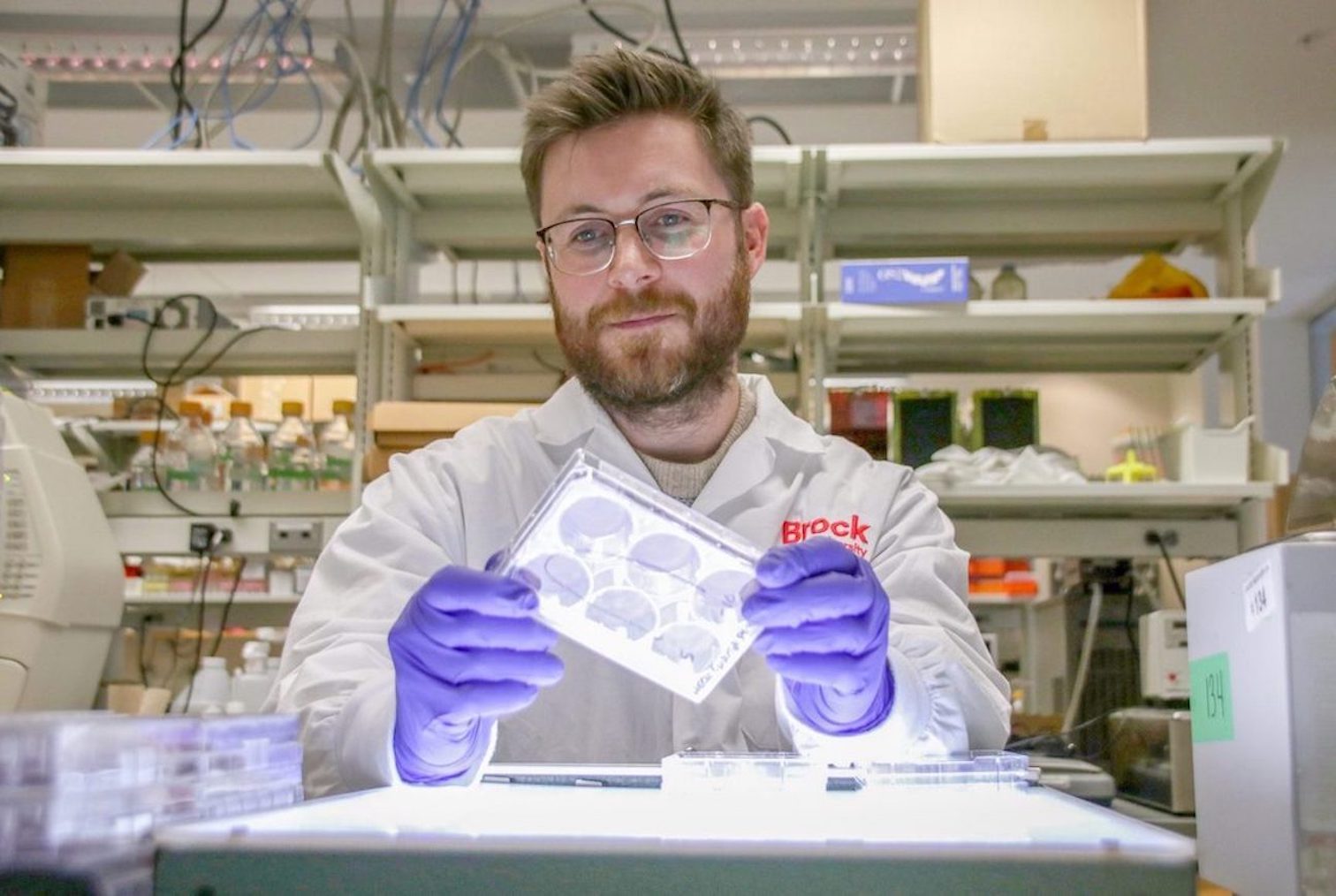

Brock research has a heart for community and a head for innovation. Our passion drives us to discover, disseminate, and apply new knowledge. Improving quality of life through leading-edge research and scholarship is what we’re all about. We are heavily invested in the economic, social and cultural health of our community and beyond. Scores of partnerships between the community and all faculties within the University make research a two-way process: we learn from one another as we discover and innovate together.
We are very proud of the research that Faculties and departments generate at Brock and the contributions that our researchers make to society. Here, we give an overview of some of our research themes and provide a few highlights of the innovative and creative work being done all across the University. For a deeper look at our research, see the 2019-2025 Brock University Strategic Research Plan. Please visit our Faculty and department pages for more information and further examples of our research.
If you are a Brock University researcher seeking support, please visit our internal Information for Researchers site or one of our research enterprise units: Office of Research Services, Office of Research Ethics, Animal Care Services or the Brock LINC.

Investing in Niagara
We help grow Niagara’s economic and social life, particularly through our internationally-renowned grape and wine research and through our community think-tank.

Understanding brain and behaviour
Our brain and behaviour research gives us a deeper understanding of all stages of human development, especially with our children and adolescents.

Promoting health and well-being
The results of our health and well-being research range from international breakthroughs to fitness programs for seniors and people living with disabilities.

Advancing plant biology and chemistry
Our scientists work with plants to create products and process used in agriculture and health care, among others.

Protecting our environment
Research on our natural environment gives us clues to tackling climate change, water governance and even life on Mars!


Exploring the meaning of life
Our wide-ranging scholarship gives us insights and inspirations on the world around us.
 Brock News stories

- Brock profs to share teen mental health, water research at Science Meets Parliament
- Putting Brock grad student research on the map
- Crawford Lake core now part of national museum’s collection
- Brock welcomes celebrated author Ann-Marie MacDonald as research collaborator
- Sustainable consumer choices the focus of grad student research
- Neuroscience research, EDI work drew Horizon scholarship recipient to Brock
- Brock expert calls for broader view in determining extreme heat’s impact on health
Research at a glance
14
Canada Research Chair allocations
Level 3
Brock’s Containment Level 3 lab with an insectary is the only one of its kind at a university in Canada
#2
Brock ranked second out of 19 universities in its category for research income from the Social Sciences and Humanities Research Council of Canada for fiscal years 2017 to 2021


20+
Research Institutes & Centres
#1
Best Canadian university for chemistry PhD programs
Erudera (online education platform)
826.9%
Rise in international collaboration publication growth from 2019 to 2000