Focus on Five: Researcher Profiles

Focus on Five: Researcher Profiles


Thad Harroun, Debbie Inglis, John Hay, Jennifer Good, Voula Marinos
 

In every nook and cranny of Brock University are researchers blazing trails, enabling the wider community to move forward with new information, insights, and innovations. Each month we bring you five such individuals who are making a difference in the world around us.


image
Thad Harroun, physicist, Department of Physics

You might think twice the next time your reach for the bottle of Vitamin
E supplements to protect against heart disease or ward off cancer. Physicist Thad Harroun is trying to unravel the mystery of whether the well-known, but little understood vitamin is really the great anti-oxident your pill bottle claims it to be.

Harroun and his colleagues are intrigued by a growing controversy: is Vitamin E an anti-oxidant that protects our cells from damage, or does it have a totally different function? “In fact, of all the vitamins, it’s probably the least well understood,” he says.

Harroun is examining the debate through a biophysics lens, measuring a membrane’s structure to see how – or even if – Vitamin E provides structure to parts of the membrane that need protecting from oxidation. This is important because polyunsaturated fatty acids such as the Omega 6s and the Omega 3s that our bodies need for maximum functioning are vulnerable to being damaged by oxidation, which is the interaction between oxygen molecules and all the different substances they may contact.

Researching the use of lipids – naturally occurring organic compounds that have varying degrees of insolubility – in hygienic and cleaning products is another area that Harroun is focused on. He is technical advisor for a newly formed company that aims to supply manufacturers with technological expertise for a wide range of products. The company’s initial product will be a mouthwash that will provide effective treatment for plaque buildup and mucositis, two oral hygiene conditions that many people contend with.

image
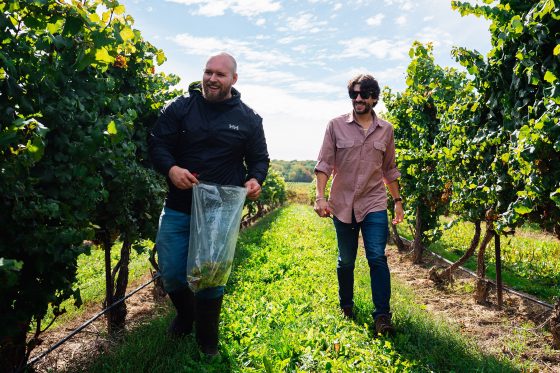
Debbie Inglis, biochemist, director, Cool Climate Oenology and Viticulture Institute (CCOVI)

When times get tough, the tough make lemonade out of lemons or, in the case of biochemist Debbie Inglis, appassimento wine out of grapes.

“Here, with climate change upon us, we have very different growing seasons: some years, we have drought, while other years are wet and cool,” says Inglis, director of Brock's Cool Climate Oenology and Viticulture Institute (CCOVI). “And so it becomes a challenge for our wine makers and viticulturists to ensure each and every year that we consistently make high quality product.”

One area of CCOVI’s climate change research focuses on introducing new, innovative, high-quality wine styles to the region’s winemakers that will do well under local conditions. And appassimento – from northern Italy, where grapes are ripened further off the vine because of a short growing season – fits the bill.

Inglis and her colleagues are halfway through the third year of an experimental program in which five Niagara wineries are in various stages of producing appassimento wine. The project uses five different treatments at various industry partner locations to ripen the grapes once they are off the vine: re-furbished tobacco kilns (Reif Estates Winery); greenhouses (European Planters); a temperature and humidity control chamber (Vineland Research and Innovation Centre); and barns, the traditional method of protecting grapes from excessive rain or freezing temperatures. As a control, the grapes are left on the vine to further ripen at Pillitteri Estates Winery).

This year, Inglis and her colleagues are involved in technical discussions with VQA Ontario – the provincial wine authority – to classify appassimento wines. The research program will provide the technical information to increase the number of winemakers interested in developing appassimento wines for Ontario and look to evaluate other red and white wine varieties to be used in this wine style.

image
John Hay, pediatric exercise medicine specialist, Department of Community Health Sciences

When research teams want to measure children’s daily activity levels without using intrusive wires and machines, they turn to pediatric exercise medicine specialist John Hay.

One scale that Hay developed – the Habitual Activity Estimation Scale, used around the globe – divides a day into four segments and categorizes activity into four components ranging from lying down to running. Children or their parents report the children’s activity levels in each category for each segment of their day.

Hay was co-investigator in a Children’s Hospital of Eastern Ontario (CHEO) research group that, on March 23, won the Otto Aufranc Award from the Hip Society in Chicago. Hay’s scale was crucial in determining the team’s key finding:

“Children who are highly active during the period of time when their hip joint is still growing but nearing completion of this growth had evidence of a small but significant alteration in the architecture of the hip joint that is known to correlate with hip dysfunction later in life,” he explains. “If you have this slight hip deformity, you are at 10 times greater risk of prematurely developing serious hip problems as an adult ”

Hay works with research teams at Sick Kids, McMaster Children’s Hospital, CHEO, and other children’s hospitals around the world, primarily measuring the physical activity of children living with chronic illnesses such as cystic fibrosis, leukemia, crohn’s disease, epilepsy, juvenile idiopathic arthritis, and renal dysfunction. He determines the impact that the children’s activity levels have on their disease progression and the side effects on bone and muscle of their treatment.

image
Jennifer Good, communication expert, Faculty of Social Sciences

What happens when you’re fed a constant diet of luxurious cars, sparkling jewelry, the gizmo-of-the-moment and other seductive eye candy flashing across the screen as you vegetate on your couch? It ain’t pretty, says communication expert Jennifer Good in her hot-off-the-presses book Television and the Earth: Not a Love Story.

Good’s childhood interest in the power of television blossomed when she encountered a concept called “cultivation theory,” which looks at the relationship between how much television people watch and how people make sense of the world.

“That evolved into a real interest in materialism and how television shapes our relationship with the stuff in our lives: how we covet stuff, how we relate to our stuff in terms of making sense of who we are; and how does that stuff relate to our attitudes about the environment?” she says.

The results are devastating. Habitat loss, the extinction of species, severe droughts, rapidly diminishing polar ice and other destruction is largely the result of unbridled materialism fueled by television’s underlying encouragement to consume earth’s resources, argues Good. “Television and the earth are on a collision course.”

She urges people to tell their stories, listen to the stories of others, and turn off the television. “There are various habits that once seemed hugely entrenched (smoking for example) that as a society we have learned to be very wary of; the time is right to change our television habits.”

image
Voula Marinos, criminologist, Department of Child and Youth Studies

“Justice is negotiated, but justice is also very fluid and discretionary.”

Criminologist Voula Marinos takes a special interest in what happens behind the scenes of the criminal justice system, where life-altering plea negotiations are often conducted in coffee shops or hallways and where victims and accused alike are sometimes mystified on the outcomes of their cases.

To get an “inside look” – and to educate the public on the nuances of the criminal justice system from the perspectives of the accused, victims, Court officials and other professionals – Marinos will become part of the system. She plans to shadow three defence counsel in Toronto courts for one year, following the cases closely to see how decisions are made, what kind of offers are presented to the accused and how these are presented, the role that the Crown plays in negotiations, and other details of the process.

Some of Marinos’ recent research with colleague Dorothy Griffiths also centers on the experience of developmentally challenged victims and accused in courts. Those living with such conditions frequently behave in atypical ways on the stand, resulting in misunderstandings or a lack of justice for their cases.

Marinos is an expert on the plea-bargaining process. “We think that when someone is charged with an offence, that it automatically goes to trial because people plead not guilty, but in fact only a very small proportion – only six to nine per cent – of cases go to trial, so that raises a lot of issues and frustrations for accused, witnesses, victims, families and members of the public about expectations and how justice ought to be delivered,” she says.