- Main
- Departments & Centres
- DEPARTMENTS
- Applied Linguistics
- Classics
- Dramatic Arts
- English Language and Literature
- History
- Modern Languages, Literatures and Cultures
- Music
- Philosophy
- Visual Arts
- CENTRES
- Centre for Canadian Studies
- Centre for Digital Humanities
- Centre for Intercultural Studies
- Centre for Liberal Arts
- Centre for Medieval and Renaissance Studies
- Centre for Studies in Arts and Culture
- SCHOOL
- Marilyn I. Walker School of Fine and Performing Arts
- ART CENTRE
- Rodman Hall Art Centre
- Degree Programs
- Students in the Humanities
- Research
- Centre for Digital Humanities
- Dean's Conference Travel Grant
- Fulbright Visiting Research Chair
- Humanities Research Institute
- HRI Mandate and Structure
- HRI Membership
- HRI Funding
- HRI Conferences and Symposia
- Conferences and Symposia 2000 - 2001
- Conferences and Symposia 2002 - 2003
- Conferences and Symposia 2004 - 2005
- Conferences and Symposia 2005 - 2006
- Conferences and Symposia 2006 - 2007
- Conferences and Symposia 2007 - 2008
- Conferences and Symposia 2008 - 2009
- Conferences and Symposia 2009 - 2010
- Conferences and Symposia 2010 - 2011
- Conferences and Symposia 2011 - 2012
- HRI Associates
- HRI Graduate Student Associates
- HRI Annual Report 2012-13

- HRI Awards
- HRI Forms and Deadlines
- The Brock Review

- Community
- Contact Us
FAQ
Faculty of Humanities
FAQ
Department of Classics
What is Classics?
Classics is the study of Greek and Roman civilzations in all of their diverse aspects: histories, languages, literatures, philosophies, and material culture. We focus on the peoples of the Mediterranean region from the Bronze Age until the Fall of the Roman Empire and the beginnings of the mediaeval period and the Byzantine Empire. We include study of the neighbouring regions as well such as Egypt, Mesopotamia, North Africa, Celtic and Germanic Europe.
Why study Classics?
These societies, especially Greece and Rome, were enormously influential for later civilization. Most of the institutions and ways of behaving that we enjoy today have their roots in the classical world. For example, democracy and ideas of citizenship, social organization, sports and athletics, art and architecture, philosophy, modern Romance languages and even English, among others, all look back to Greece and Rome for their origins. In order to understand ourselves, we must know where we came from. The program in Classics also offers you the opportunity to travel and study abroad and experience the living cultures in the Mediterranean world today.
What skills do I learn with a Classics degree?
Like most humanities programs, Classics fosters excellence in written and oral communication skills. All classes include the objective to continually improve a student's research and writing skills. Students learn to read and analyse primary evidence, such as texts and artifacts, to appreciate the arguments of others, and to evaluate them critically for bias, distortion, and relevance. Communication skills are greatly strengthened through presentations but also by acquiring familiarity with Greek and Latin. A thorough knowledge of how to express yourself in English comes through studying a foreign language, Greek and Latin especially, given the reliance of English on these languages for so much of its vocabulary and grammatical structure.
What different areas can I concentrate on?
We have three main areas of study: art and archaeology, literature and languages (Greek and Latin), and ancient history. All Classics majors must take some courses from each broad area, but you can focus on the stream that interests you the most. Classics often appeals to those students with a range of interests, since we offer and encourage students to take a variety of courses: for example, some ancient history courses, some ancient art courses, some archaeology courses, some literature courses, some language courses.
Can I go on an archaeological dig?
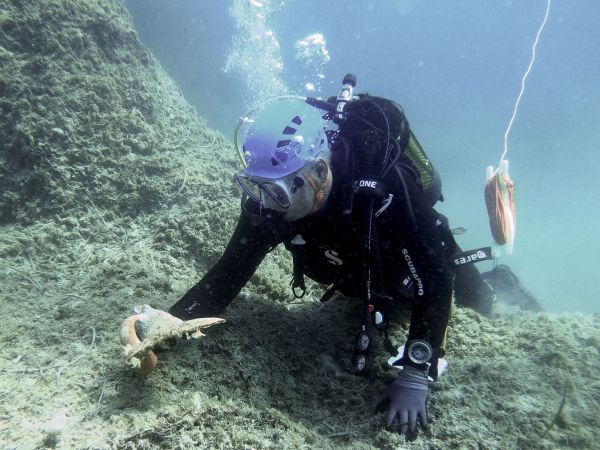
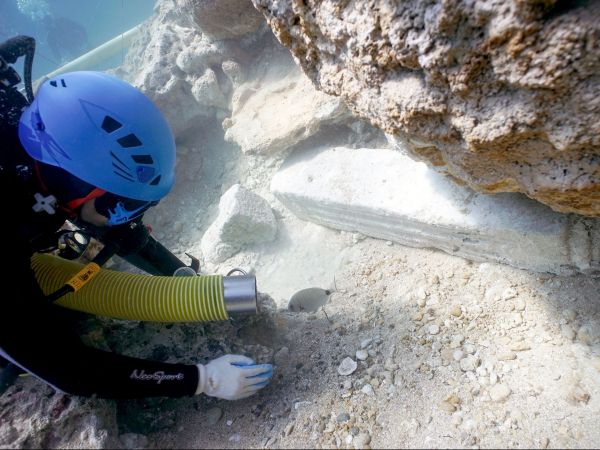
Yes. The Classics Department at Brock traditionally offers a course abroad every summer, led by a Brock Classics professor. In even numbered years (i.e. 2008, 2010, 2012 etc) we offer an archaeological practicum. In 2008, some students accompanied Dr Angus Smith to dig in Greece, while others went with Dr Elizabeth Greene on an underwater excavation off the coast of Turkey. In 2010, Dr Barbara Burrell led the archaeological practicum at Stabiae, on the Bay of Naples in Italy. Other excavations have taken place on Crete and on Cyprus.
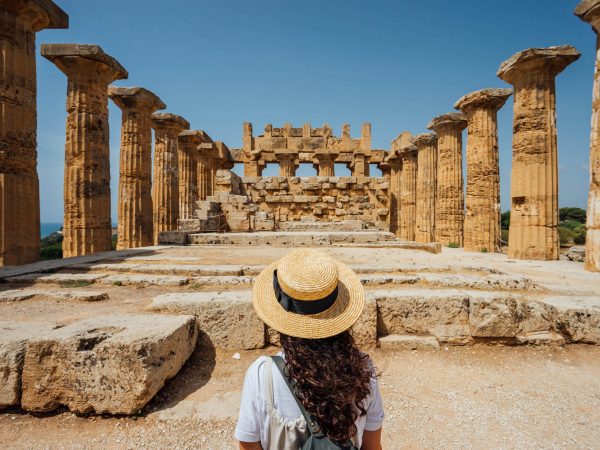
In odd numbered years (i.e. 2007, 2009, 2011 etc), we offer a study tour in Mediterranean countries. For example, in 2007 Dr Allison Glazebrook took students to Greece, while in 2009 Dr Elizabeth Greene took students on a study tour through Turkey. In the past, Dr Michael Carter and Dr Carol Merriam have led study tours to Italy. The study tour for the summer 2011 is currently being planned and will be announced during the academic year 2010-2011, usually by December.
These overseas courses offer a once-in-a-lifetime chance to explore the contemporary culture as well as hands on learning about ancient Greece and Rome. Brock offers generous bursaries and the Department of Classics has raised considerable money for scholarships and travel awards to support student travel.
Will I get to know my professors?
Yes. The Classics department at Brock has 10 permanent professors. Most were hired in the past few years and all are enthusiastic teachers. We consider our students to be at heart of the department and take pride in knowing all of our students. In upper years (3rd and 4th year especially) the classes are smaller and the students and professors interact in a seminar classroom setting.
Is there a club for Classics students?
Yes. The Brock University Archaeological Society (BUAS) is one of the most active on campus and a source of great pride for the department. The students are very active both arranging social gatherings and academic meetings. In the winter, BUAS has a long tradition of organizing a "Scholarly Symposium", inviting professors from Brock and other universities to speak on a chosen theme. The Scholarly Symposium has become very well-regarded by professors at other universities.
The Classics department maintains an Undergraduate Workroom that is the students' own study space, as well as an Undergraduate Lounge where students can gather for lunch and socializing. Please visit us in the department and stop by both of our undergraduate spaces!
What can I do with my Classics degree after I graduate?
A Classics degree sharpens your intellectual, critical, logical, and communication skills. Your Classics degree counts as that post secondary degree now expected of most employment opportunities. Classics graduates are found in a great variety of occupations and have gone into graduate programs both in Canada and abroad. Our graduates work in many different fields, including Law, Library Science, Teaching, Museum Work, Publishing, Civil Service, Policing, Art Conservation, Administration and more.
Classics Events
Peer mentors are here to help three times a week!
March 26, 2013 - 12:00pm - April 8, 2013 - 4:00pm
New exhibit on ancient technology now open in Brock's Cypriote Museum
March 15, 2013 - 5:00pm - August 30, 2013 - 5:00pm