Brock University Department of Classics


MA Program in Classics

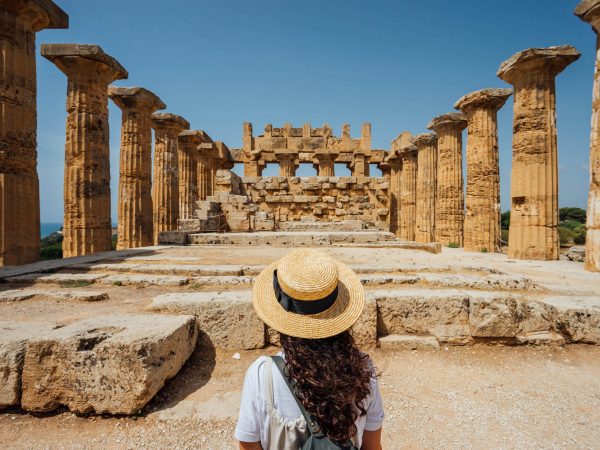
The Master of Arts in Classics emphasizes a holistic approach to the Greek and Roman worlds and encourages all students to study languages, literature, history, and material culture. Students continue to work on their Greek and Latin in order to ensure they can access the wealth of literary and documentary sources which have survived and still continue to surface. The program also assigns prominence to historical context and material culture, especially promoting active archaeological research and travel to the Mediterranean. The program is structured on the principle that these diverse approaches inform one another and produce a cross-disciplinary, well-rounded and thus broader understanding of the world and legacy of the Greeks and Romans.

Program Requirements

The MA is a two-year program.

There are two schemes for the M.A. Degree: (1) with major research paper, and (2) with thesis. Students who qualify for funding receive five terms of funding for scheme 1 and six terms of funding for scheme 2.

Students wishing to do scheme 2 must provide the Graduate Program Director with a recent transcript and a statement (no more than one page) that includes a description of the topic, the name of the desired Supervisor and the reason for the request. This statement is due in mid-April at the end of the first year of study and a final decision will be made in consultation with the Graduate Committee (currently all permanent faculty) and potential Supervisor.

Scheme 1. Requirements for the MA with major research paper

Nine half-credit courses (one-term courses) offered by the Department. Additional advanced undergraduate Greek or Latin courses may be recommended to address deficiencies in the languages. Required courses include:

  1. CLAS 5P00 Classics Pro-seminar, during the student’s first year
  2. three courses designated GREE 5(alpha)00 or above and LATI 5(alpha)00 or above (at least one in each language)
  3. five other courses designated CLAS 5V10-5V79, CLAS 5P80, GREE 5(alpha)00 or above or LATI 5(alpha)00 or above.

Demonstrate competence in a modern language, normally French or German.This requirement should be done by the end of the first year.

Pass sight translation exams in Latin and Greek by the time of graduation.

Complete a satisfactory research paper, normally 40-50 pages in length, on an approved topic, written in the second year of study under the guidance of a Supervisor.

Scheme 2. Requirements for the MA with thesis

Seven half-credit courses (one-term courses) offered by the Department. Additional advanced undergraduate Greek or Latin courses may be recommended to address deficiencies in the languages. Required courses include:

  1. CLAS 5P00 Classics Pro-seminar during the student’s first year.
  2. three courses with the designation GREE 5(alpha)00 or above and LATI 5(alpha)00 or above (at least one in each language)
  3. three other courses designated CLAS 5V10-5V79, CLAS 5P80 GREE 5(alpha)00 or above or LATI 5(alpha)00 or above.

Demonstrate competence in a modern language, normally French or German. This requirement should be completed by the end of the first year.

Pass sight translation exams in Latin and Greek by the time of graduation.

Complete a satisfactory thesis on an approved topic, normally 80-100 pages in length, written in the second year of study under the guidance of a Supervisor and Supervisory Committee.

Pass an oral examination to defend the thesis.

Course Descriptions

Classics

CLAS 5F90: MA Research and Thesis

CLAS 5P90: Major Research Paper

CLAS 5P00: Pro-seminar in Classics (2007 - 08: A. Glazebrook)
A survey of the tools, resources and methodologies for a holistic study of Greco-Roman antiquity with emphasis on philology, history and material culture. Research writing for grant, abstract, conference proposal, and public presentation.
Seminar, 3 hours per week.
Note: this course is evaluated on a pass/fail basis.

CLAS 5V10-5V29: Seminar in Mediterranean Archaeology
Topics and problems in current archaeological method, theory and research in the Mediterranean basin.
Seminar, 3 hours per week.

2006-7: CLAS 5V10: Topics in Aegean prehistory (R.A.K. Smith)
Study of a specific chronological, geographical or theoretical aspect of the Minoan, Mycenaean or Cycladic cultures of the Aegean basin.

2007-8: CLAS 5V11: Archaeological Theory (R.A.K. Smith)
Fundamentals of archaeological theory and its relationship to the archaeological method. The history of thought in archaeology (with particular reference to 20th century and contemporary archaeology).

CLAS 5V30-5V49: Seminar in the Art and Architecture of the Greco-Roman World
Topics and problems in current research in the Greek and Roman art and architecture.
Seminar, 3 hours per week.

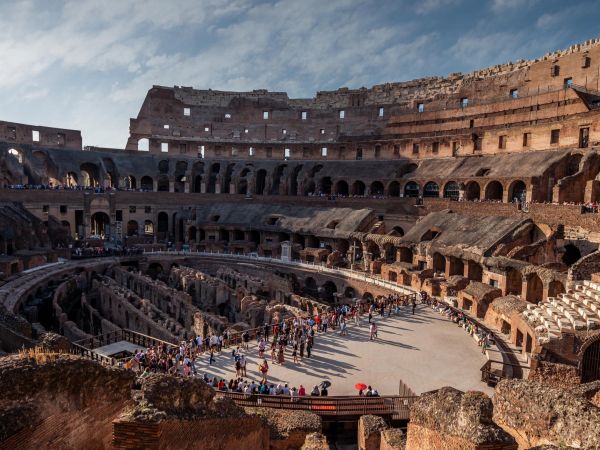
2006-2007: CLAS 5V30: Topography and Monuments of Rome (M.J. Carter)
Study of the development of Rome, including its infrastructure and major monuments, using literary and archaeological sources and understanding the methodological challenges of integrating material and literary sources

CLAS 5V50-5V69: Seminar in Greek and Roman Social and Cultural History
Study of a topic in Greek and/or Roman social and cultural history with emphasis on methodology and the use of sources from a variety of media.
Seminar, 3 hours per week.

2006-2007: CLAS 5V50: Augustus and the Roman Revolution (M.J. Carter)
Study of the political and social changes in the transitional period of Roman history, integrating literary sources, documentary texts and the evidence of material culture.

2007-2008: CLAS 5V51: Theoretical Approaches to the Classics (A. Glazebrook)
Various theoretical approaches, such as social constructionism, Marxisim, feminism, and the value of applying such theories to ancient evidence.

2007-2008: CLAS 5V52: Ancient Mediterranean Socioeconomics (K. von Stackelberg)
Ancient history explored through connective agriculture and trade of the Mediterranean region (Italy, Greece, Spain, North Africa, Syria and Egypt). Introduction to ancient economic theory and urban studies. Topics include envrionmental limitations, demographic preference, and urban impact.

CLAS 5V80-5V89: Advanced Archaeological Research
Intensive archaeological field work and study of material culture under supervision of a faculty member.

Greek

GREE 5P80: Directed Readings in Ancient Greek Authors
A reading course constructed in conjunction with a faculty member. This course will be designed for individual students by the faculty member and given final approval by the Graduate Program Director.

GREE 5V00-5V19: Readings in Greek Literature: prose
Intensive readings in a genre of Greek literary prose or the works of an individual prose author.
Seminar, 3 hours per week.

2006-2007: GREE 5V00: Classical Greek Historians (R. Parker)
A survey of the development of Greek historical writing through the end of the Classical period with extensive Greek readings in the works of Herodotus, Thucydides and Xenophon.

GREE 5V20-5V39: Readings in Greek Literature: verse
Intensive readings in a verse genre or the works of an individual verse author.
Seminar, 3 hours per week.

2007-2008: GREE 5V20: Hesiod and the Homeric Hymns (E. Greene)
An analysis of the major Homeric Hymns in their social, cultural, performative, archaeological, artistic and literary context. The course will involve close readings of the Hymns to Apollo, Demeter, Hermes, and Aphrodite, selected shorter hymns, and sections of Hesiod's Theogony, which we shall read as a Hymn to Zeus.

Latin

LATI 5P80: Directed Readings in Ancient Latin Authors
A reading course constructed in conjunction with a faculty member. This course will be designed for individual students by the faculty member and given final approval by the Graduate Program Director.

LATI 5V00-5V19: Readings in Latin Literature: prose
Intensive readings in a genre of Latin literary prose or the works of an individual prose author.
Seminar, 3 hours per week.

2007-2008: LATI 5V10: Tacitus, Readings in the Agricola (M.J. Carter)
Note: taught in conjunction with LATI 4V10.

LATI 5V20-5V39: Readings in Latin Literature: verse
Intensive readings in a verse genre or the works of an individual verse author.
Seminar, 3 hours per week.

2006-2007: LATI 5V21: Vergil (C. Merriam)
Readings in the works of Vergil.

Facilities

The Department of Classics is home to a small collection of Cypriot artifacts (170+ objects; see /classics/museum.php for more information). This study collection is intended to promote student familiarity with the protocols of handling such objects and with publication methodology. There are two small workrooms, one for the storage of the collection and the other for research assistants working on archaeological projects with faculty.

The department also owns a slide and image collection, which is in the process of digitization and storage in a database program. For on-line resources see /library/databases/index.php?view=subject&subject=Classics.

The Canada Foundation for Innovation and the Ontario Innovation Trust have provided funds for the purchase of equipment intended for use on archaeological projects, including a Leica TCR750 reflectorless total station and a Trimble Geoexplorer CE XT Global Positioning System.

The Department of Classics is an institutional member of the American School of Classical Studies in Athens and the Canadian Institute in Greece. Faculty regularly conduct research under the auspices of these institutions, as well as at the British School in Rome and the American Academy in Rome.

Overseas Opportunities

The Department regularly offers overseas courses at the undergraduate level, including the archaeological field school and study tours to Rome and to Greece. Future plans include a study tour to Turkey. Graduate students who have not previously excavated or participated in a study tour can enroll in these courses, and those that have may qualify for teaching assistant positions in these courses.

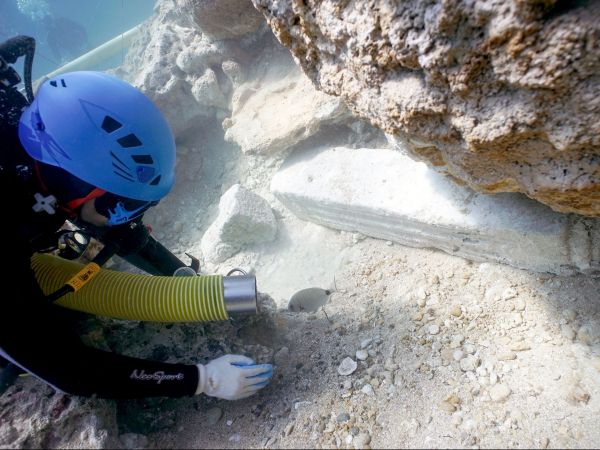
Faculty members conducting research overseas frequently take students to assist them. Prof. Angus Smith has taken students to excavate at Mokhlos, Crete and at Nemea, Greece; students have assisted Prof. David Rupp with the organization of his Palaipaphos survey material for publication both at Brock and in Cyprus; Prof. Elizabeth Greene has students assisting her with the analysis of material from a shipwreck discovered at Kekova, Turkey.

For financial assistance for overseas opportunites, please see: Tributes to Honour Danielle

Financial Assistance

The University provides the best candidates with packages that include fellowships and teaching assistant positions. Dean of Graduate Studies Entrance Scholarships and Dean of Graduate Studies Excellence Scholarships are also available for excellent students.

The department has teaching assistantships in undergraduate courses in first-year Greek and Latin, Greek mythology; Greek and Roman civilization; Greek and Roman history; ancient sport; introductory and classical archaeology; Near Eastern and Egyptian, Greek and Roman art; and Greek sanctuaries. These are an integral part of the graduate student experience, providing valuable experience in the classroom.

There also may be positions to assist in the management of the slide collection and departmental website, and to assist faculty with their research.For further financial and fee information see: http://www.brocku.ca/gradstudies/current/financial.php

Application Procedures

Applicants should have a BA Honours, or equivalent degree in Classics, with a minimum overall average of B (second class), a minimum average of 75% (B) in Classics courses and with at least two years in Greek and two years in Latin at the university level. Applicants must supply three letters of reference; a statement of intent including research interests and goals of not more than two pages in length; a representative piece of written work of not more than 20 pages; and transcripts of all post-secondary course-work. Applicants must also complete the Graduate Studies on-line application form, available at:

https://experience.brocku.ca/Graduate_Study/admissions.ezc

Admission is not guaranteed by the attainment of the minimum of either university or graduate program admission requirements. Admission is a competitive process.

For more information, contact the Graduate Program Director:

Prof. Allison Glazebrook, aglazebrook@brocku.ca

For additional information regarding Graduate Studies at Brock visit:

http://www.brocku.ca/gradstudies/

and

https://experience.brocku.ca/Graduate_Study/GradStudies.ezc

Revised:  August 14, 2009

Brock University
St. Catharines, ON
L2S 3A1
905-688-5550
Department of Classics
A207 Mackenzie Chown Complex
© 2007, Disclaimer
Frances Meffe
Administrative Assistant
classics@brocku.ca
905-688-5550 x3575
Brock University Department of Classics