Brock brief looks at affordability of child care for Niagara families
A mother in the Niagara Region would have to earn almost $38,000 a year to feel that it was affordable to return to work after having just one child.
After finishing her undergraduate degree in psychology and child and youth studies at Brock University, Ashley Hobden spent a good part of a year volunteering in impoverished communities in Brazil.
Brock is building its reputation as a university known for a culture of research leadership.
To help, Gary Libben, Vice-President of Research, is co-ordinating the development of 2020 Vision: The Brock 2013 Research Plan. It’s the latest edition of University’s strategic research plan, a guide for advancing research at Brock until 2020 and measuring the milestones the institution reaches all the while.
Two Brock researchers are included in this year’s line-up of Canada Research Chair holders, announced by the federal government March 15.
A Community Health Sciences professor is being recognized for his work as a co-investigator on a study about the effects of children’s activity on hip development.
Nothing spells challenge like SWB. Short for the Science Without Borders program, SWB has resulted in Brock University welcoming 39 students from Brazil who are here for one year to tackle a program of intensive English, academic studies and a short-term research internship.
Brock University has signed an agreement with The Centre for Drug Research and Development (CDRD) that will allow Brock’s researchers to tap into CDRD’s drug development infrastructure and expertise.
Joe Norris, dramatic arts professor and co-inventor with Richard Sawyer of Washington State University in Vancouver, of a new research methodology called “Duoethnography.”??
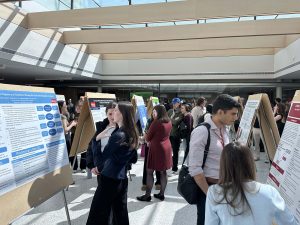
The Brock Research Celebration, a one-day event highlighting research excellence at Brock University, happens Feb. 12.
David D’Angelo was intrigued by the concept of biodegradable forks, knives, spoons and other utensils, a technology his father stumbled across while running factories in China.